

Brandwatch Solves the Wrong Problem for SaaS Founders
Reputation monitoring scaled. Real-time buying intent didn’t.


TL;DR
What changed: Brandwatch went all-in on enterprise. It optimized for reputation, compliance, and massive archives, not speed or revenue.
Who still needs this: SaaS founders still need one thing Brandwatch no longer delivers: real-time churn and switch intent.
What to build: The opportunity is to build a focused signal engine that finds buyers already looking to leave a competitor.
What Opened the Door
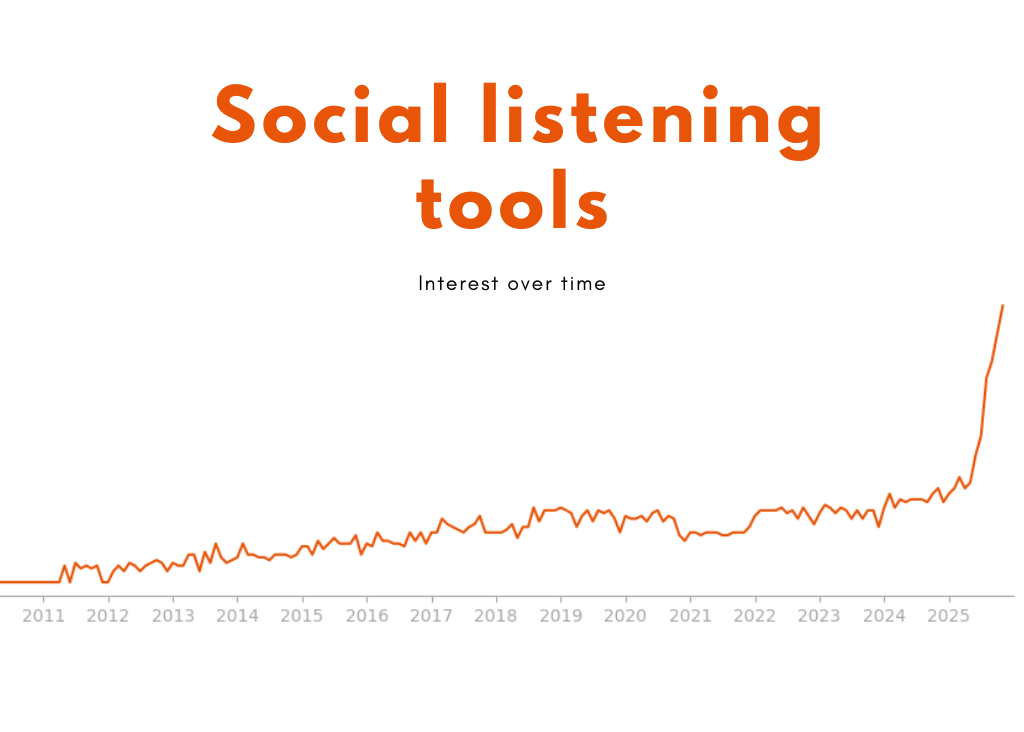
Brandwatch started as a flexible social listening tool. Over time, funding rounds, mergers, and the Cision acquisition pushed it upmarket. The product became a suite. Pricing became opaque. Setup stretched from minutes to weeks. The value shifted from immediate action to executive reporting.
That makes sense if your buyer is a Fortune 500 brand tracking share of voice across regions. It breaks completely if your goal is to find someone on Reddit saying “we’re canceling X, what should we use instead?”
Brandwatch now sells reputation health. But small teams don’t need dashboards or ten years of history. They need speed. They need to catch intent while it’s still warm.
Who Got Left Behind
The people left behind aren’t marketers with budgets. They’re builders. Solo founders. Two-to-five person SaaS teams. Micro-agencies doing hands-on sales.
Their workflow is simple. Monitor a handful of competitors. Get notified the moment someone complains, asks for alternatives, or signals churn. Reply within minutes. Book a call. Move on.
Brandwatch doesn’t fit this flow. The cost is too high. The setup is too heavy. The output is a dashboard when what they want is a notification.
So they hack it. Manual Reddit searches. F5Bot alerts flooding inboxes. DIY scripts that break when APIs change. All of it noisy. All of it slow.
What they want is calm. A short list of real opportunities. Something they’d happily pay $29–49 a month for if it reliably surfaced 3–5 real conversations a week.
Where Indie Wins
You don’t beat Brandwatch by competing feature for feature. You win by refusing to play that game.
Small, focused SaaS products win by staying narrow. By caring about one job and doing it end to end. In this case, that job is finding people who are ready to switch tools.
Big platforms are built to analyze the past. Indies can win by acting in the present. Alerts instead of reports. Intent instead of sentiment. Slack instead of dashboards.
The moment you stop trying to be a social suite and start being a revenue signal, the product gets simpler. And that’s the wedge.
How to Build an MVP
Core Features That Matter
High-intent keyword tracking.
You define a small set of competitor names and trigger phrases like “alternative”, “switching from”, or “canceling”. The system ignores generic mentions and focuses only on language that signals buying intent.
AI-based intent classification.
Every post is scored by an LLM to decide whether it represents real churn, comparison, or frustration. This is what kills noise and prevents inbox spam.
Real-time alerts.
When a post crosses the intent threshold, it’s pushed immediately to Slack or email. Speed matters here: the value is replying while the thread is still active.
Context-first lead view.
Each alert includes the original post, the detected intent reason, and basic context so you can respond intelligently without digging or switching tools.
Reply assistance (optional).
The system can suggest a neutral, helpful reply based on the user’s complaint or question. It’s not auto-posting, just removing blank-page friction.
Lightweight history and tagging.
Store past alerts, mark outcomes like “replied” or “booked call”, and quickly see what actually converts. No CRM bloat, just signal tracking.
For Developers
Frontend: Next.js + Tailwind CSS — Fast server-rendered pages for alert-heavy views, with Tailwind keeping the UI minimal, scannable, and inbox-like without design overhead.
Backend: Supabase (Postgres + Auth) — Managed Postgres is perfect for storing alerts, intent scores, and lightweight history, while built-in auth removes all user management friction for an early-stage SaaS.
APIs: Reddit API + X API — Official APIs ensure reliability and compliance while polling targeted queries keeps costs predictable for intent-focused monitoring.
AI Layer: OpenAI — LLM-based classification turns raw mentions into intent signals, filtering out noise and tagging posts as churn, comparison, or frustration automatically.
Notifications: Slack Webhooks — Push high-intent alerts directly into the founder’s existing workflow, eliminating the need for dashboards or daily check-ins.
Hosting: Vercel — Zero-config deploys, fast edge performance, and instant previews make it ideal for iterating quickly on alert logic and UI.
For No-Coders / Light MVP
Data capture: Reddit API via a no-code connector or proxy. Start by choosing 3–5 relevant subreddits and a small list of competitor keywords. Use a connector or simple proxy service to pull new posts every 10–15 minutes instead of streaming everything. This keeps costs low and results focused.
Intent scoring: Make + OpenAI. In Make, create a scenario that sends each new post’s text to OpenAI with a simple prompt asking whether the post shows churn, comparison, or buying intent. If the answer is no, drop it. If yes, continue the flow. This single step removes most noise.
Storage: Airtable or Xano. Save only high-intent posts with fields like keyword, intent type, source, link, and status. Airtable is fastest to start and easy to inspect manually. Xano is better if you want cleaner APIs and future scalability.
Alerts: Slack or email via Make. When a post passes the intent check, send a concise alert with the quote, link, and detected reason. This should feel like a lead notification, not a report. Keep it short so it’s actionable.
Light UI: Softr or WeWeb. Build a simple internal dashboard that lists recent alerts, lets you mark them as replied or closed, and links back to the original post. Think inbox, not analytics. This is optional at first but helps when volume grows.
This setup can be built in a weekend, proves real demand fast, and teaches you exactly where users see value before you write any custom code.
Builder Prompt Toolkit
UI Design Prompt
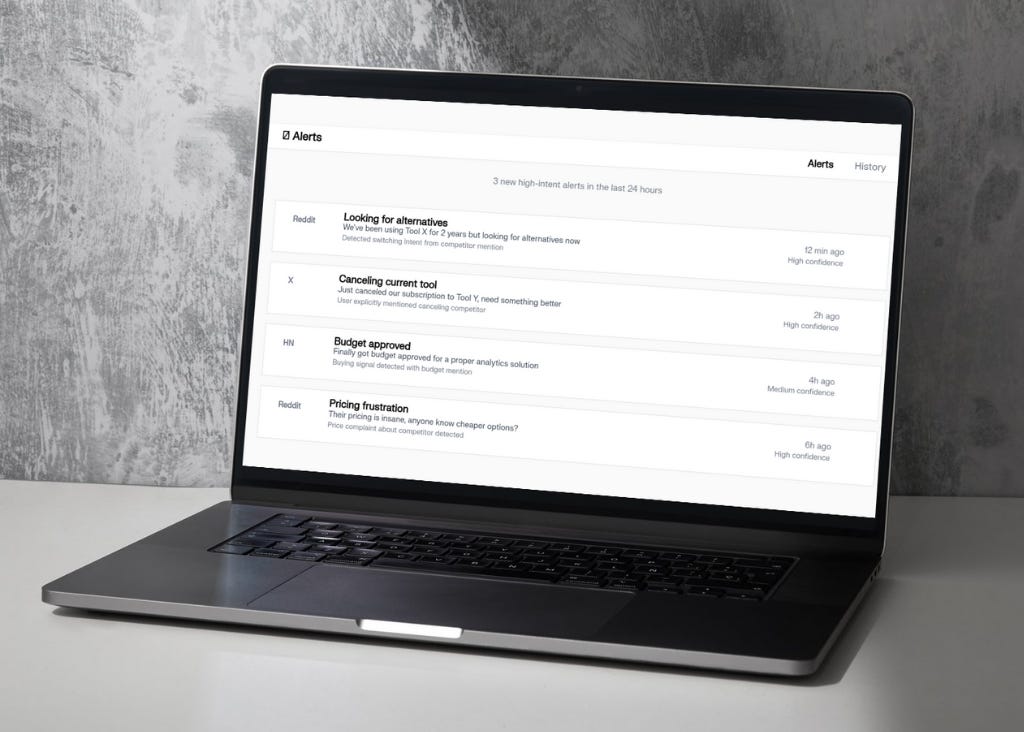
Design a calm, focused SaaS application built for SaaS founders and small go-to-market teams whose primary goal is to spot high-intent social posts and act on them immediately. The product should feel like an inbox for opportunities, not an analytics platform. The default screen is a clean “Alerts” view showing a vertical list of recent high-intent posts. Each row displays the platform icon, subreddit or source name, time since posted, detected intent label such as “Churn”, “Looking for alternatives”, or “Pricing complaint”, and a short highlighted excerpt explaining why this post was flagged. The list must be fast to scan, optimized for reading, and usable without any onboarding or configuration.
Clicking an alert opens a detailed view that keeps context front and center. The original post content is shown in full, with highlighted phrases that triggered the intent detection. Above or beside it, show lightweight metadata such as keyword matched, confidence score expressed as plain language like “High confidence”, and a direct link to reply on the original platform. Include a compact reply helper area that suggests a neutral, helpful response draft, clearly marked as optional and editable, never auto-posted.
Navigation should be minimal and obvious. A top bar with just Alerts, History, and Settings is enough. The History view shows past alerts with simple status markers like Open, Replied, or Converted, allowing users to quickly see what led to conversations. Settings should be plain and non-technical, focused only on managing keywords, competitors, alert destinations, and notification frequency. Avoid any charts, graphs, sentiment timelines, or dashboards that require interpretation.
Visually, the UI should feel calm and trustworthy, inspired by tools like Notion or Linear. Use a light background, neutral grays, soft borders, subtle shadows, and clear typography with strong hierarchy. Buttons should be understated and action-focused, such as “Open post” or “Mark as replied”. Spacing should be generous to reduce cognitive load. The entire product should feel designed for solo founders working quickly, often from Slack or email, who want clarity, speed, and confidence rather than analysis or reporting.
Landing Page Prompt
Write a landing page for a SaaS product built to help SaaS founders and small go-to-market teams catch revenue opportunities the moment they appear. Open with a sharp, relatable pain: realizing someone asked for alternatives to your competitor hours ago and you missed it. The headline should promise speed and relief, something about seeing intent before it goes cold. The subheadline should clearly position the product as a real-time alert system for churn and switch intent, not a social listening or brand monitoring tool.
Structure the page to feel simple and honest. After the hero, show how it works in three short, plain-language steps: monitor key conversations, filter for real buying intent, get instant alerts. Emphasize what’s intentionally missing: no dashboards, no sentiment charts, no setup overhead. Reinforce that this tool exists because enterprise platforms became bloated, expensive, and disconnected from how indie teams actually sell.
Include a short founder story written in first person about trying Brandwatch or similar tools, getting priced out or overwhelmed, and deciding to build something calmer and more focused. Pricing should be explicit and reassuring: one flat monthly price, cancel anytime, no sales calls, no contracts. End with a low-friction CTA that feels builder-to-builder, such as “Get alerts, not dashboards” or “See switch intent in real time,” paired with a simple email capture rather than a demo request.
Validation Email Prompt
Hey — quick question.
Do you ever find posts like “we’re canceling X” or “looking for an alternative to Y” days too late? By the time you see them, the thread is full and someone else already booked the call.
That gap hurts more than it should. You know those posts exist, but checking Reddit, X, or HN manually is noisy and time-consuming. And the big social listening tools feel like overkill when all you want is a heads-up at the right moment.
I’m testing a lightweight tool that alerts you in real time when someone is actively looking to switch tools in your space. No dashboards, just high-intent alerts.
Curious how you’re handling this today? Happy to share what I’m building if it’s useful.
Take Action Today
Pick one competitor in your space and manually track Reddit for a week. Count how many real switch signals you see.
Build a scrappy version of the alert flow with Make and Slack in one afternoon.
Talk to five founders and ask a single question: “How do you find people ready to leave your competitors?”